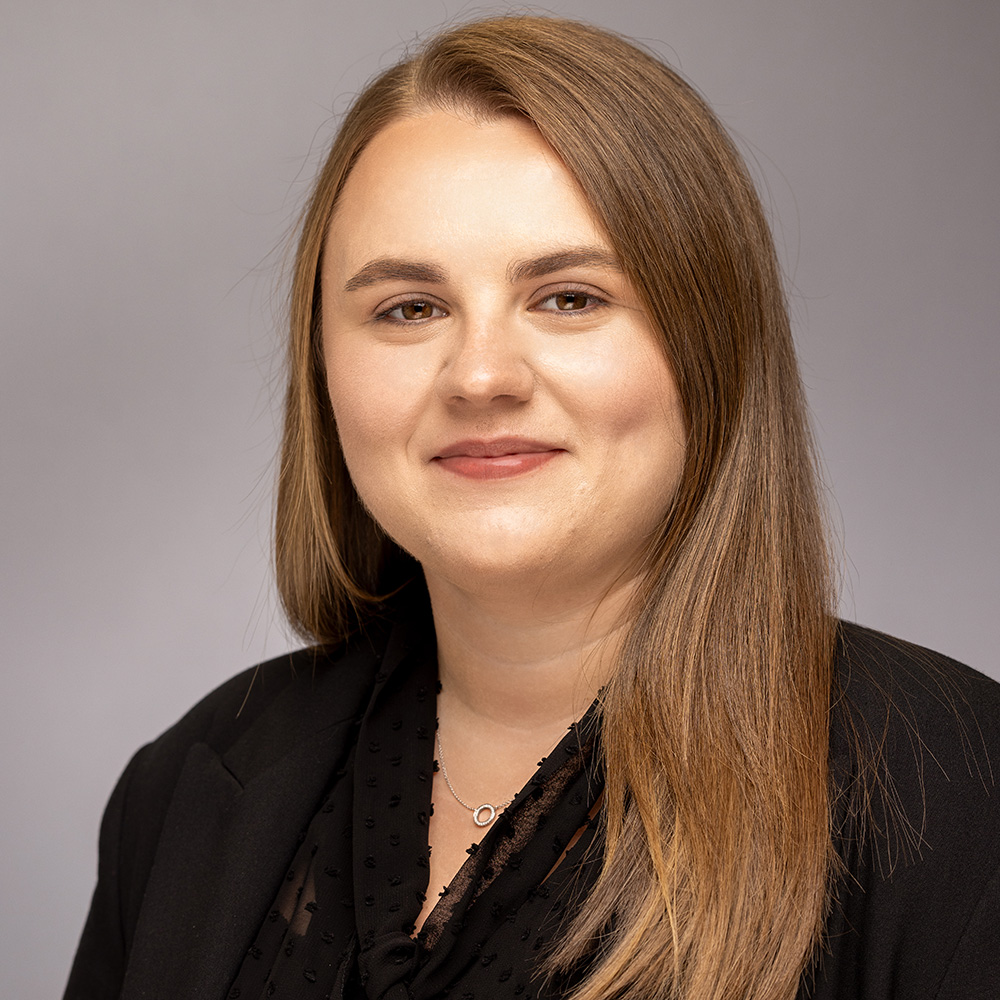
Chris Burns
Partner & Head of Family (North)
VIEW PROFILE
Family law solicitors
Our Family Law Solicitors help individuals and families understand their legal options when separation, divorce, child arrangements, financial settlements or future plans feel uncertain. When your home, finances, children or next steps are involved, clear family law advice can help you move forward with greater confidence.
Our family law solicitors combine specialist legal knowledge with a calm, practical approach to avoid conflict whenever possible, as we understand your concerns about how long the process will take, what it may cost, how your children will be affected or whether you will need to go to court.
Our role is to listen carefully, explain your position in plain English and help you make informed decisions at a pace that feels manageable.
Where appropriate, our Family Law Solicitors focus on non-court dispute resolution, including constructive negotiation, mediation and other collaborative routes, before court proceedings are considered. When an agreement can be reached, we can help you put it on a secure legal footing. Where court action is necessary, we will prepare your case carefully, explain what to expect and support you throughout the process with clear, steady advice.
At Flint Bishop, our wider firm is recognised by Legal 500 and Chambers, and holds the Investors in People Gold accreditation. These standards reflect the service, professionalism and care we aim to bring to every client relationship.
With teams of Family Solicitors in Birmingham, Derby, Leeds, Sheffield, Swansea and York, Flint Bishop is one of the leading firms for legal support across England and Wales.
To speak to one of our family lawyers to discuss your options, please call us on 0330 123 9501.
Family law solicitors
Our family solicitors are recognised as one of the leading family law teams in the Midlands and are well known for providing first-class advice with a personal touch.
We frequently advise individuals on a wide range of family law issues from divorce, finances and child arrangements, to cohabitation and pre and postnuptial agreements.
Regularly acting on high-net-worth client cases involving international elements, our legal advice capabilities continue to broaden to encompass foreign laws and regulations. The strong working relationships we have developed with family lawyers outside of the UK enable us to promptly and efficiently deal with a wide range of overseas issues that may be involved.
Our family lawyers are consistently recognised as recommended lawyers by leading directories such as The Legal 500 and Chambers and Partners.

Find a Legal Expert
Testimonial
I was nervous about restarting divorce proceedings after previously trying to handle the separation without solicitors. Five years had passed, financial circumstances had changed, and I was unsure how a new financial order might affect me.
From my very first call with Chris, I felt reassured. He listened carefully, explained everything clearly, and made a potentially stressful process feel manageable. I always knew what to expect next and felt supported throughout.
What stood out most was Chris’s combination of friendliness and clear, precise advice. I never felt intimidated—in fact, I felt completely at ease. This was a stark contrast to my earlier experience with another local solicitor, which felt impersonal and focused only on costs.
I would recommend Chris and Sally without hesitation.
Family Client
“I switched my divorce case from a lacklustre national solicitor chain to Richard Buckley, and it was the best decision I could have made. His ability to articulate arguments and challenges with clarity and logic significantly accelerated my case. In just two weeks, Richard achieved more progress than my previous solicitor managed in 18 months. His mediation skills are outstanding, leading to a swift and satisfactory resolution. I have no hesitation in recommending Richard Buckley’s services to anyone in need of expert legal support.”
Private Client
“Angela Davis is a diligent and thorough solicitor with a wealth of experience in both Children Act matters and matrimonial finance. She is always thoroughly prepared and has an eye for detail.”

“The private client family team at Flint Bishop is exceptional. Their lawyers are knowledgeable approachable and extremely capable of understanding client’s needs and problems and finding a quick solutions.”
“Angela Davis – a senior well-established lawyer with a real strength and depth in her approach to cases which only comes after years of working within this field. A calm considered and determined solicitor.”

“Excellent!!! Can’t recommend Angela Davis and her team enough! Angela’s expertise and experience and super calm manner turned what could have been a very stressful experience into a ‘walk in the park’. The whole team are amazing. Angela went above and beyond, and I will be eternally grateful. I can’t recommend Flint Bishop, especially Angela Davis, enough.”
“Angela Davis is an extremely capable and knowledgeable solicitor. She knows her area of law thoroughly and she is very pleasant to deal with. She will stand her corner when required, however, and is by no means a pushover. She is extremely thorough, and I would recommend anyone to her.”
“Angela Davis is very personable with a good sense of how to work in her clients’ best interests.”
“Flint Bishop’s family law practice is made up of very committed and determined practitioners who regularly act for high net-worth individuals and offer a real feeling of a bespoke and individual care.”
“Angela Davis – a senior well-established lawyer with real strength and depth in her approach to cases which only comes after years of working within this field. A calm considered and determined solicitor.”
“This team has outstanding children lawyers who work as a team to support all of the clients. They are all very committed and determined practitioners. They offer a real feeling of a bespoke caring and individual care for their clients.”
“Flint Bishop dealt with my divorce over a period of nearly 3 years due to delaying on my ex-husbands part. My first solicitor, who had been very supportive in the early stages when I was unsure of the procedures, left the company during this time. However, I had excellent continuity as my case was taken over by a partner at no extra cost. I was always kept informed very clearly of everything that my solicitor was doing on my behalf and was consulted when appropriate. When my solicitor was away I was always given details of another solicitor at the firm who would be able to help me if needed. Even throughout lockdown and beyond, my case was moved forward as much as possible given the problems caused with my ex-husband’s solicitor. I particularly liked the fact that it was possible to communicate by phone rather than only by email as I have experienced with other solicitors. This is much more efficient and enabled me to make informed decisions more easily. I live in Hertfordshire and Flint Bishop are in Derby but this caused no difficulties in any regard due to their flexibility over exchanging documents etc. I would highly recommend their services.”
Private Client
“Friendly and approachable at all times. I felt I was in safe hands with Angela Davies. She was always very approachable and gave good advice. I was more than happy with my overall outcome and would recommend Angela as a financial solicitor.”
Private Client
“Flint Bishop fields a ‘strong team of very senior and capable solicitors’. The practice is geared towards representing high-net-worth clients, handling complicated financial issues and matters involving arrangements for children.”
“Words cannot express how much help and support Flint has been to me over the last five years. I just wished I had approached Flint Bishop when I first needed the advice and representation, not coming to you so many years later when things went awry. They have been truly wonderful and I thank them from the bottom of my heart.”
Private Client
“A highly knowledgeable, experienced and exceptionally customer-orientated family law team, specialising in wealth preservation with an aim to empower clients to make informed decisions.”

Contact Us
For more information and support, or to request a call back with one of our expert family lawyers, please complete the form below. Alternatively, please call us on 0330 123 9501.
Knowledge

On Monday 29 September, Flint Bishop successfully completed the acquisition of the entire business of Lupton Fawcett LLP. You have been forwarded to the page most relevant to your visit.
Please feel free to explore our website and learn more about our legal services and professionals, including those who have recently joined us from Lupton Fawcett.